Wall Street Embraces Canton Network for Tokenized Assets
Major financial institutions including DTCC, Visa, and Franklin Templeton are utilizing the privacy-enabled layer-1 blockchain.
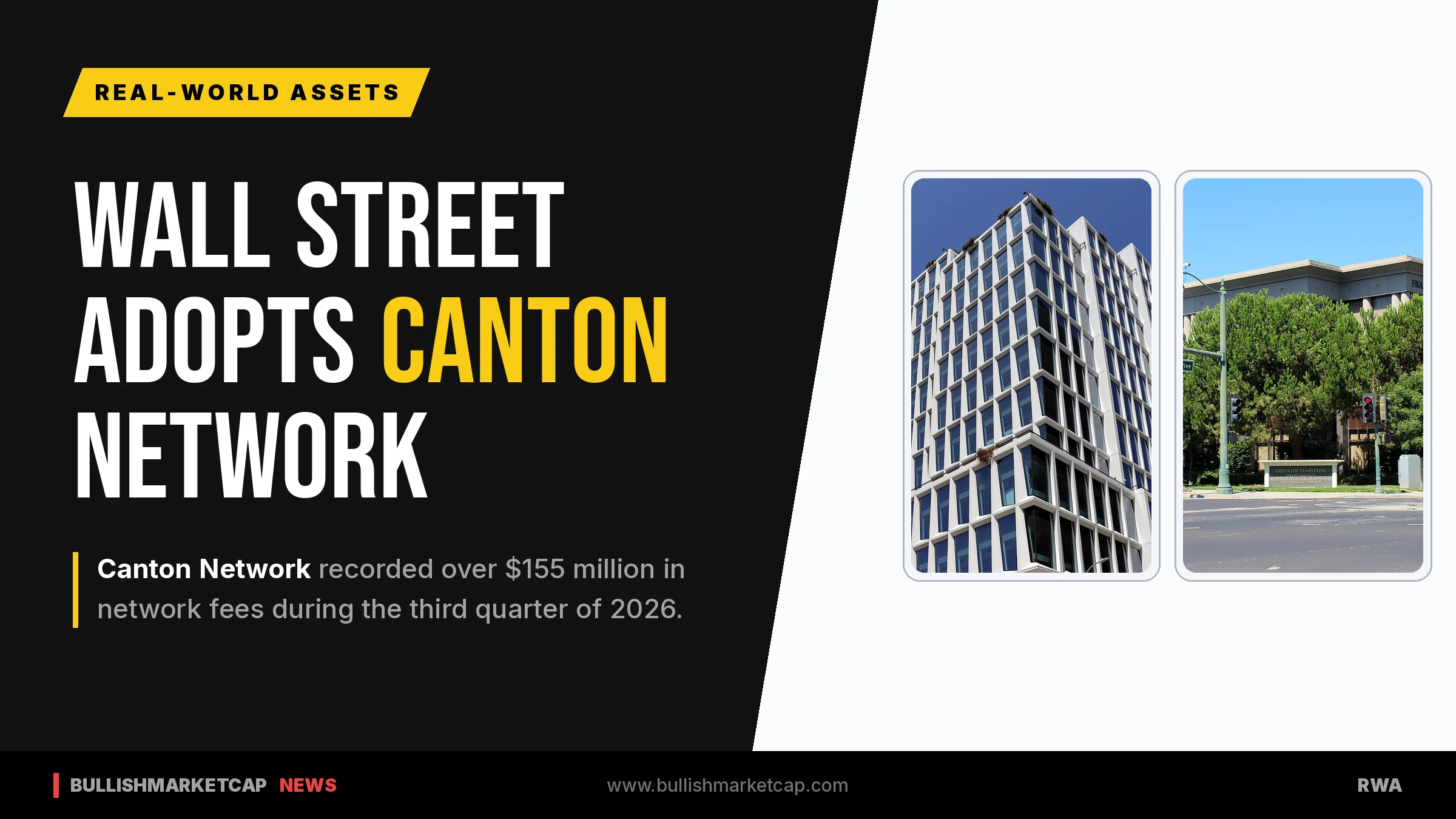
Canton Network, a public layer-1 blockchain developed by Digital Asset, has attracted major Wall Street names to its privacy-preserving network for tokenized assets and institutional trading, according to Decrypt.
Sub-Transaction Privacy Model
Instant Telegram notifications for large on-chain moves.
Unlike traditional blockchains where all transactions and balances are publicly visible, Canton Network shares transaction data exclusively with the parties directly involved in each trade. Participating institutions operate their own validator nodes connected through the Global Synchronizer, which is governed by the Global Synchronizer Foundation and operated by Super Validators. Smart contracts on the network are written in Daml, specifying signatories and observers to ensure data privacy.
Financial Adoption
Traditional finance heavyweights have integrated the network into their operations. The Depository Trust & Clearing Corporation (DTCC) launched its commercial Tokenization Service on Canton in October 2026. Payment giant Visa joined as a Super Validator in March 2026, followed by Franklin Templeton in August and the London Stock Exchange Group (LSEG) in September. Additionally, network activity generated more than $155 million in network fees in the third quarter of 2026, paid by burning the native Canton Coin (CC).
Key facts
- Canton Network launched its public infrastructure, the Global Synchronizer, in July 2024 alongside Canton Coin.
- Digital Asset raised $355 million in a funding round led by a16z crypto in June 2026.
- DTCC's Tokenization Service launched commercially on October 28, 2026, using 25 securities.
- Canton recorded over $155 million in network fees in the third quarter of 2026.
Source: decrypt.co
This article is for information only and is not investment advice. BullishMarketCap news is produced with AI assistance from public sources and reviewed by our editors; see our editorial policy. Spotted an error? Tell us.