Crypto Card Failures Expose Risks of Shared Infrastructure
Recent crypto debit card outages and exploits highlight how wallet and fintech brands often hold little control over upstream banking and payment infrastructure.
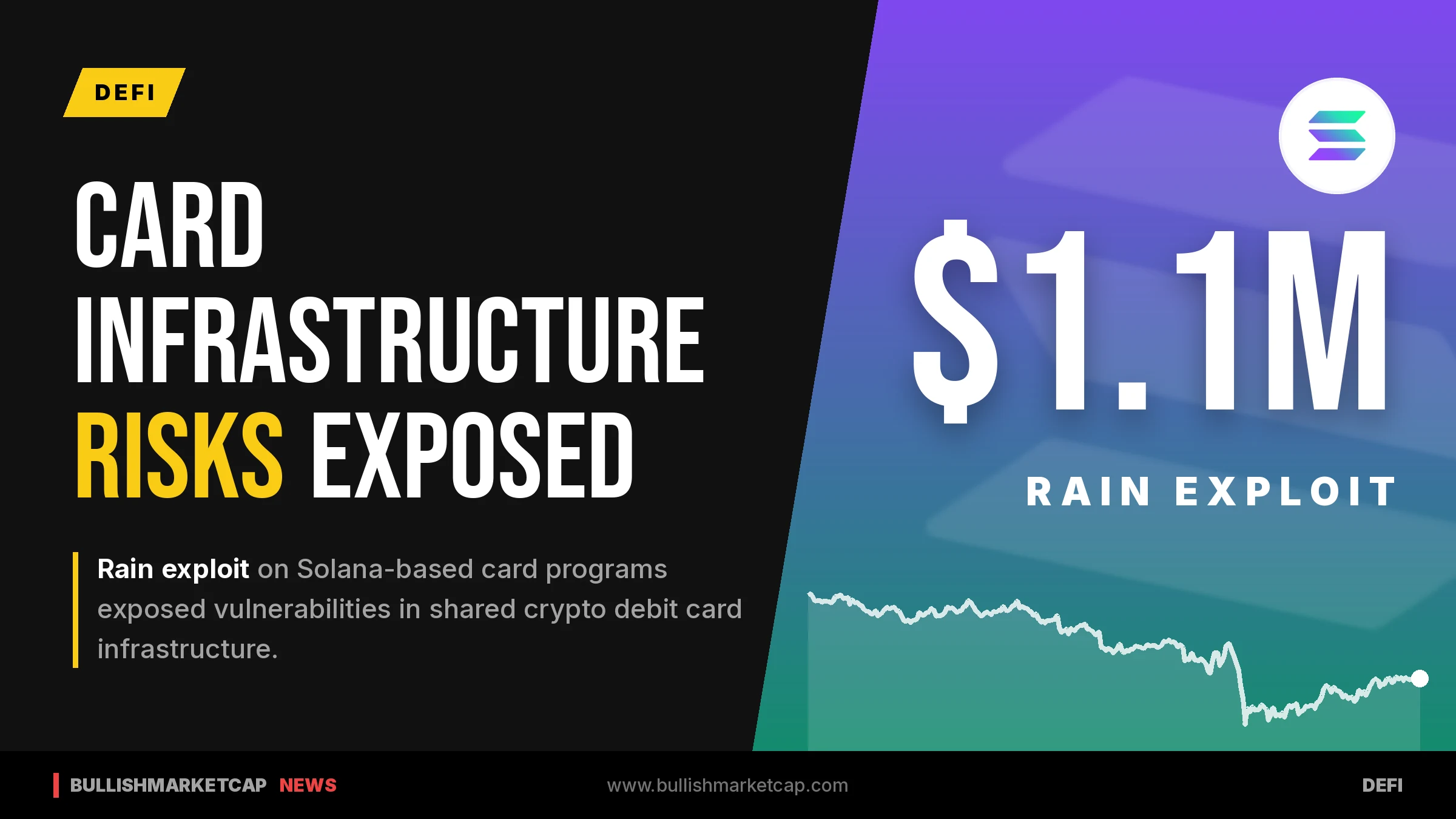
Recent failures across crypto debit card services have underscored how fintech brands and wallet providers frequently possess limited control over their underlying payment infrastructure. According to CryptoNews, incidents such as an August exploit on Rain and insolvency issues at Kulipa have demonstrated the systemic vulnerabilities tied to shared banking, processor, and middleware vendors.
Upstream Vulnerabilities and Exploits
Instant Telegram notifications for large on-chain moves.
Rain's August exploit targeted funded card balances on Solana-based programs, resulting in approximately $1.1 million in stablecoin theft without breaching personal wallets or private keys. Meanwhile, MNEE App CEO Ron Tarter noted that Kulipa's summer insolvency disrupted card programs supporting roughly twenty wallets and fintechs, leaving consumers unaware until payment attempts failed. Separate infrastructure issues also hit Gnosis, which experienced software module exploits forcing card services offline and extracting $1.5 million.
Tarter explained that companies relying heavily on Banking-as-a-Service platforms often control only their app interface, card design, and marketing. Sponsor banks provide banking permissions and hold fiat deposits, while separate vendors manage identity checks, compliance, fraud prevention, and wallet services. Program managers possess the authority to restrict or terminate services deemed too risky, leaving consumer-facing brands unable to independently restore operations.
Safeguards and Mitigations
To mitigate upstream risks, Tarter recommends establishing direct bank relationships and securing independently accessible customer records. Companies should map every intermediary, obtain subcontractor lists, and clarify whether funds sit in individual accounts or pooled FBO accounts. US deposit insurance protects against insured bank failures rather than nonbank app company collapses, making independent audits such as SOC 2 Type II reports and robust contract terms critical for operational continuity.
Key facts
- Rain's August exploit targeted Solana-based card programs, resulting in about $1.1 million in stablecoin theft.
- Gnosis reported a software module exploit in June that extracted $1.5 million and rendered another $300,000 inaccessible.
- Kulipa's summer insolvency disrupted card programs serving approximately twenty wallets and fintechs.
- US deposit insurance covers eligible bank failures but does not protect against a fintech provider's collapse.
Source: crypto.news
This article is for information only and is not investment advice. BullishMarketCap news is produced with AI assistance from public sources and reviewed by our editors; see our editorial policy. Spotted an error? Tell us.