Bond Market Volatility Rises As MOVE Index Hovers At 116
Bond market volatility is climbing, signaling potential stress in global finance even as bitcoin and U.S. stocks remain near steady levels.
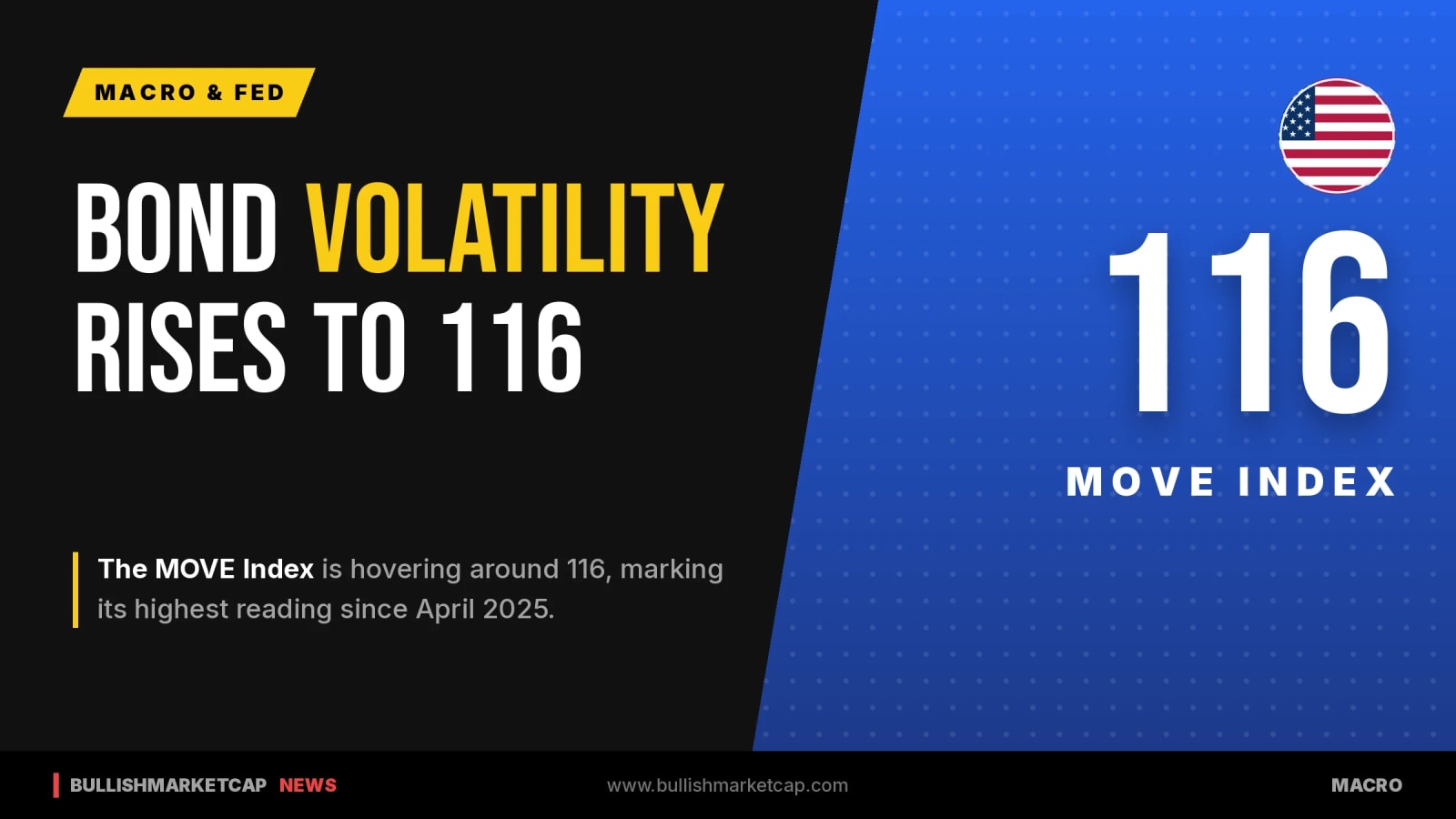
Rising volatility in Treasury notes is raising questions among macro observers over whether broader financial stress will eventually spill over into equities and cryptocurrencies. According to data cited by wealth manager Kurt S. Altrichter, the ICE BofA U.S. Bond Market Option Volatility Estimate, known as the MOVE Index, has been making higher lows while the VIX posts lower highs.
MOVE Index Reaches 116
Instant Telegram notifications for large on-chain moves.
The MOVE Index, which measures expected swings in U.S. Treasury yields over the next month using options on two- to thirty-year bonds, recently jumped 46% in June and is hovering around 116. This puts the gauge close to its March high and at its loftiest reading since April 2025. Because Treasury notes serve as preferred collateral in international finance and influence global borrowing costs, rising volatility can tighten financial conditions and increase risk premiums.
Impact on Corporate Borrowing
The upswing in bond volatility has already begun affecting corporate debt markets. According to data from Cboe shared on X, corporate bond volatilities have climbed significantly, with investment grade and high-yield volatilities jumping from low percentiles two weeks ago to their 79th and 84th percentile highs, respectively.
Key facts
- The MOVE Index is hovering around 116, marking its highest reading since April 2025.
- The index previously jumped 46% in June, reflecting increased expected swings in U.S. Treasury yields.
- Investment grade and high-yield corporate bond volatilities reached the 79th and 84th percentiles, respectively.
- Bitcoin and S&P 500 volatility gauges remain near year-to-date lows despite rising bond market stress.
Source: coindesk.com
This article is for information only and is not investment advice. BullishMarketCap news is produced with AI assistance from public sources and reviewed by our editors; see our editorial policy. Spotted an error? Tell us.