Brazil Election Results Could Reshape Crypto Rules
Brazil votes in a presidential election with Lula and Flávio Bolsonaro in a tight race that may impact digital asset regulations, taxes, and stablecoin oversight.
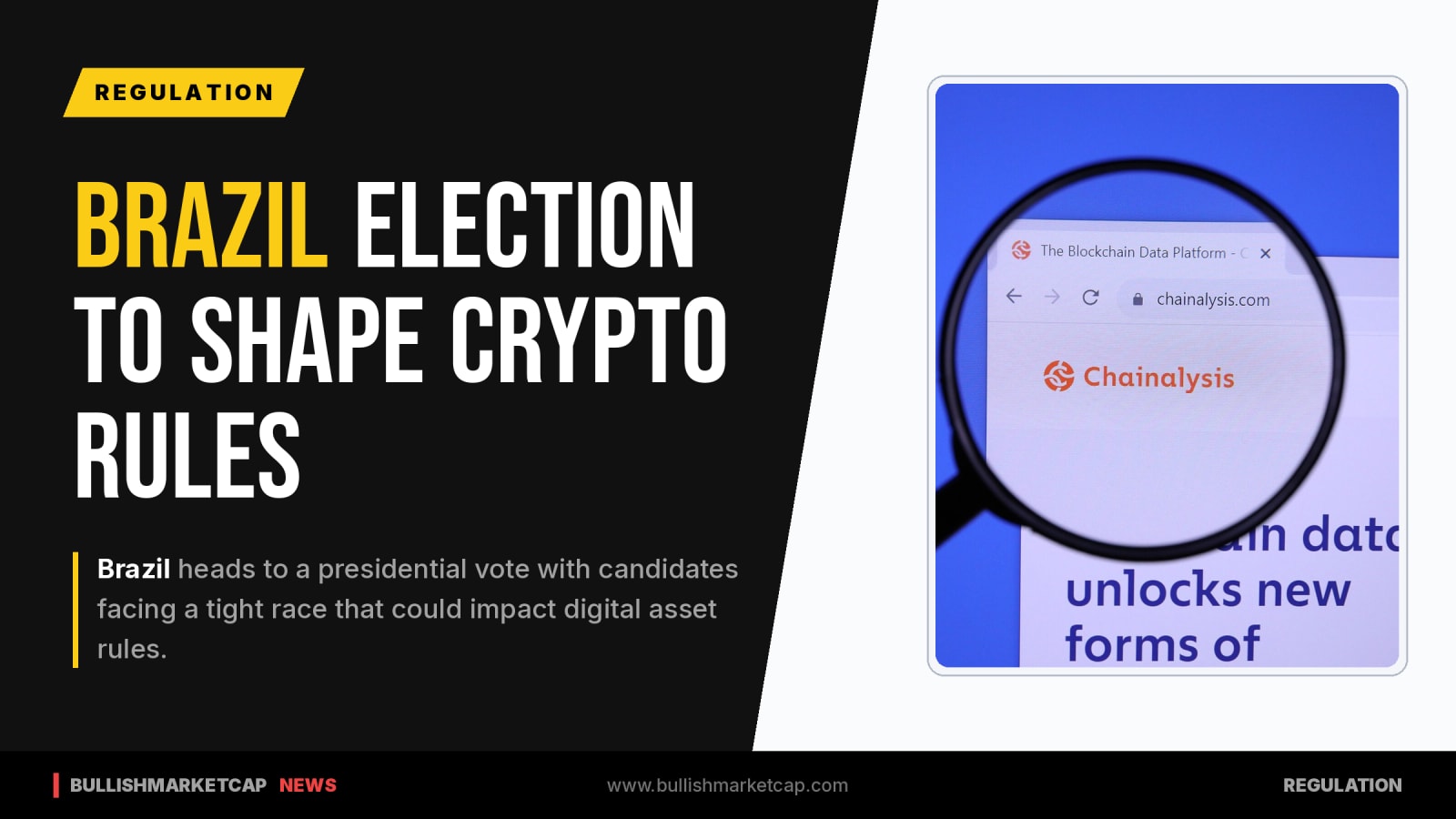
Brazil has entered its presidential election with President Luiz Inácio Lula da Silva and Senator Flávio Bolsonaro in a tight race according to the final Datafolha poll, as the country’s crypto sector navigates newly implemented licensing, reporting, and stablecoin-related rules. According to CryptoNews, the final pre-election survey published Oct. 3 put Lula at 45% and Bolsonaro at 42% of valid votes.
Data and predictions indicate a potential second-round runoff scheduled for October 25 if no candidate receives more than half of valid votes. While prediction markets such as Polymarket implied a higher chance of a Bolsonaro victory, opinion polling points toward a close contest within overlapping margins of error. Brazil ranks first globally in Chainalysis’ 2026 crypto adoption index, with $252.5 billion in estimated activity.
Instant Telegram notifications for large on-chain moves.
Regulatory Framework Under Lula
Crypto policy has not been a defining campaign issue, but the next administration will inherit a regulatory framework that expanded significantly during Lula’s current term. The Brazilian Central Bank has moved virtual-asset companies into its formal regulatory perimeter under Resolution BCB 520, which covers operating requirements, governance, customer protection, and anti-money laundering procedures.
Additional regulations introduced days before the election include Resolution 588, which requires covered financial institutions to report virtual asset transfers of at least $10,000 involving self-custody wallets to Coaf. Furthermore, Resolution 589 mandates that regulated institutions cannot facilitate operations with unauthorized virtual-asset service providers starting November 6. Tax policy developments, including public consultations on stablecoin transactions, were previously delayed during the election period, while the Federal Revenue Service implemented DeCripto for reporting transactions aligned with OECD frameworks.
Flávio Bolsonaro's Position
A Bolsonaro victory introduces regulatory uncertainty because his official government program filed with the Superior Electoral Court contains no specific cryptocurrency, stablecoin, or virtual-asset proposals. His economic program includes proposed regulatory rollbacks and tax cuts, though applying these directly to the Central Bank's crypto framework remains speculative as no explicit repeal or amendment has been filed.
Key facts
- Lula holds 45% and Flávio Bolsonaro holds 42% of valid votes in the final Datafolha poll.
- Resolution 588 requires reporting of self-custody transfers worth at least $10,000 to Coaf starting October 1.
- Brazil ranks first globally in Chainalysis’ 2026 crypto adoption index with $252.5 billion in estimated activity.
- Stablecoins represented roughly 80% of declared crypto transaction volume in July, up from 3.5% in 2019.
Source: crypto.news
This article is for information only and is not investment advice. BullishMarketCap news is produced with AI assistance from public sources and reviewed by our editors; see our editorial policy. Spotted an error? Tell us.