
Bitcoin Slides Near 11‑Week Low as US CPI Beats Forecast
Bitcoin fell to $73,518 after October CPI rose 0.4% MoM, prompting markets to price in a December Fed rate hike.
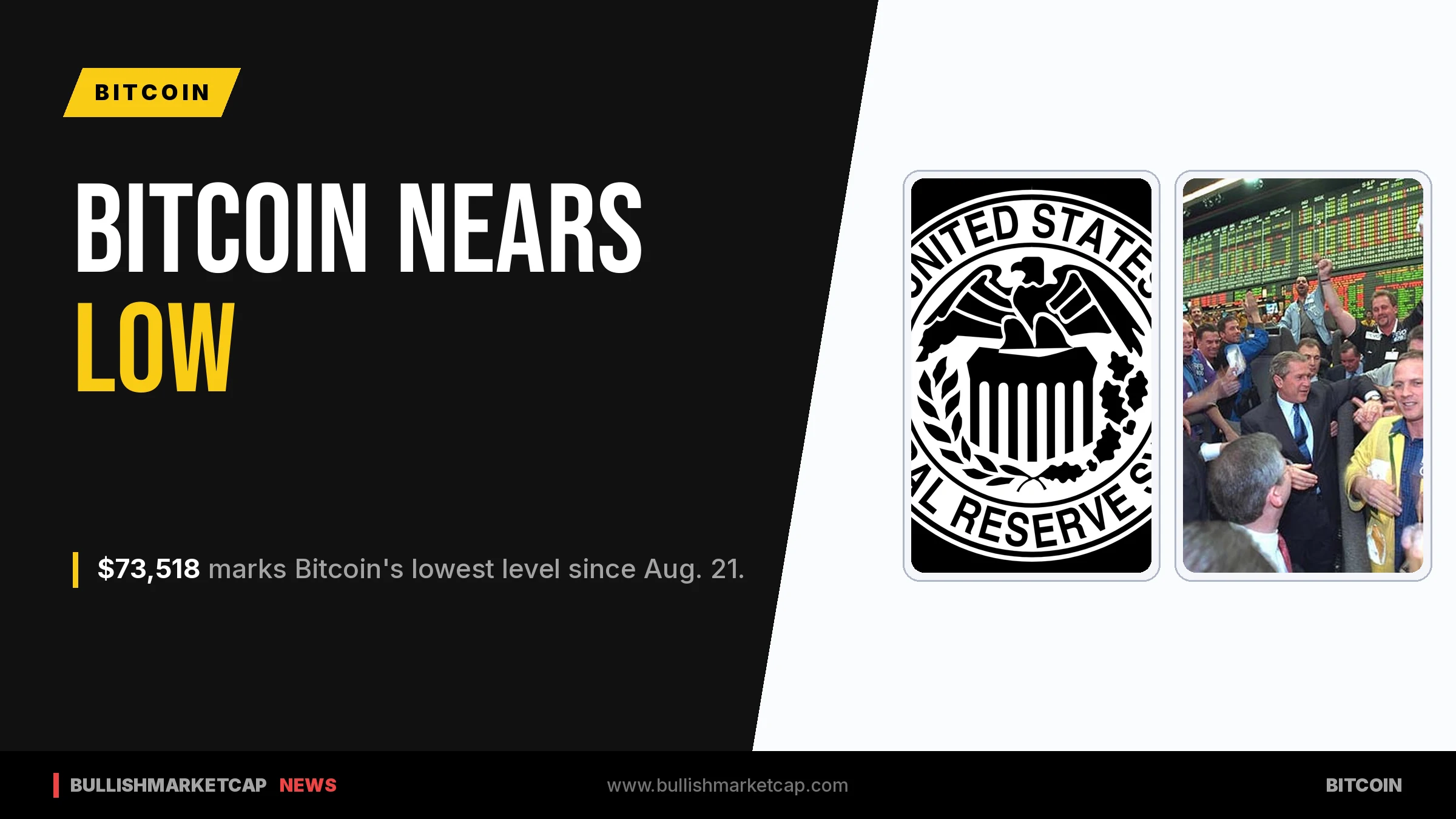
Bitcoin ($BTC) slipped toward its 11‑week low of $73,518 on Tuesday morning as the U.S. Consumer Price Index (CPI) for October posted a 0.4% month‑on‑month increase, outpacing the 0.3% forecast. The dip was brief, with the price briefly rebounding above $74,000 before settling near the low recorded on Sunday, the lowest level since Aug. 21.
CPI Data and Market Reaction
Instant Telegram notifications for large on-chain moves.
The October CPI showed a slower energy price rise of 0.7% compared with September’s 5.2%, but shelter and food indexes contributed to the overall increase. Economist Robin Brooks described the report as “discouraging,” noting the lingering impact of the recent oil‑price shock on core inflation. TradingView data captured BTC/USD at $73,518, nearly matching the recent trough.
Fed Rate Hike Expectations
Federal Reserve Governor Christopher Waller signaled support for a 25‑basis‑point rate hike in December, even if inflation cools. CME Group’s FedWatch Tool reflected a 96.3% probability of that outcome after the CPI release, with a 25‑bp hike priced at 85.3% and a 50‑bp hike at 14.7%.
Impact on Stocks and Nasdaq
U.S. equities opened lower, with the Nasdaq Composite down 0.6% before recovering. Nvidia shares fell nearly 4% amid a board investigation. Mosaic Asset Company highlighted “extreme” sell‑side pressure on the Nasdaq, citing a spike in the equity put/call ratio.
Key facts
- BTC/USD fell to $73,518, its lowest since Aug. 21.
- October CPI rose 0.4% MoM, above the 0.3% forecast.
- FedWatch shows a 96.3% chance of a 25‑bp rate hike in December.
- Nasdaq opened down 0.6% before recouping losses.
- Energy inflation slowed to 0.7% from 5.2% in September.
Source: cointelegraph.com
This article is for information only and is not investment advice. BullishMarketCap news is produced with AI assistance from public sources and reviewed by our editors; see our editorial policy. Spotted an error? Tell us.