Trezor Cuts Resellers by 80% After Safe 5 Implant Discovery
Trezor has severed ties with roughly 80% of its reseller network after discovering hardware implants inside Safe 5 crypto wallets sold by former distributor CryptoBilis.
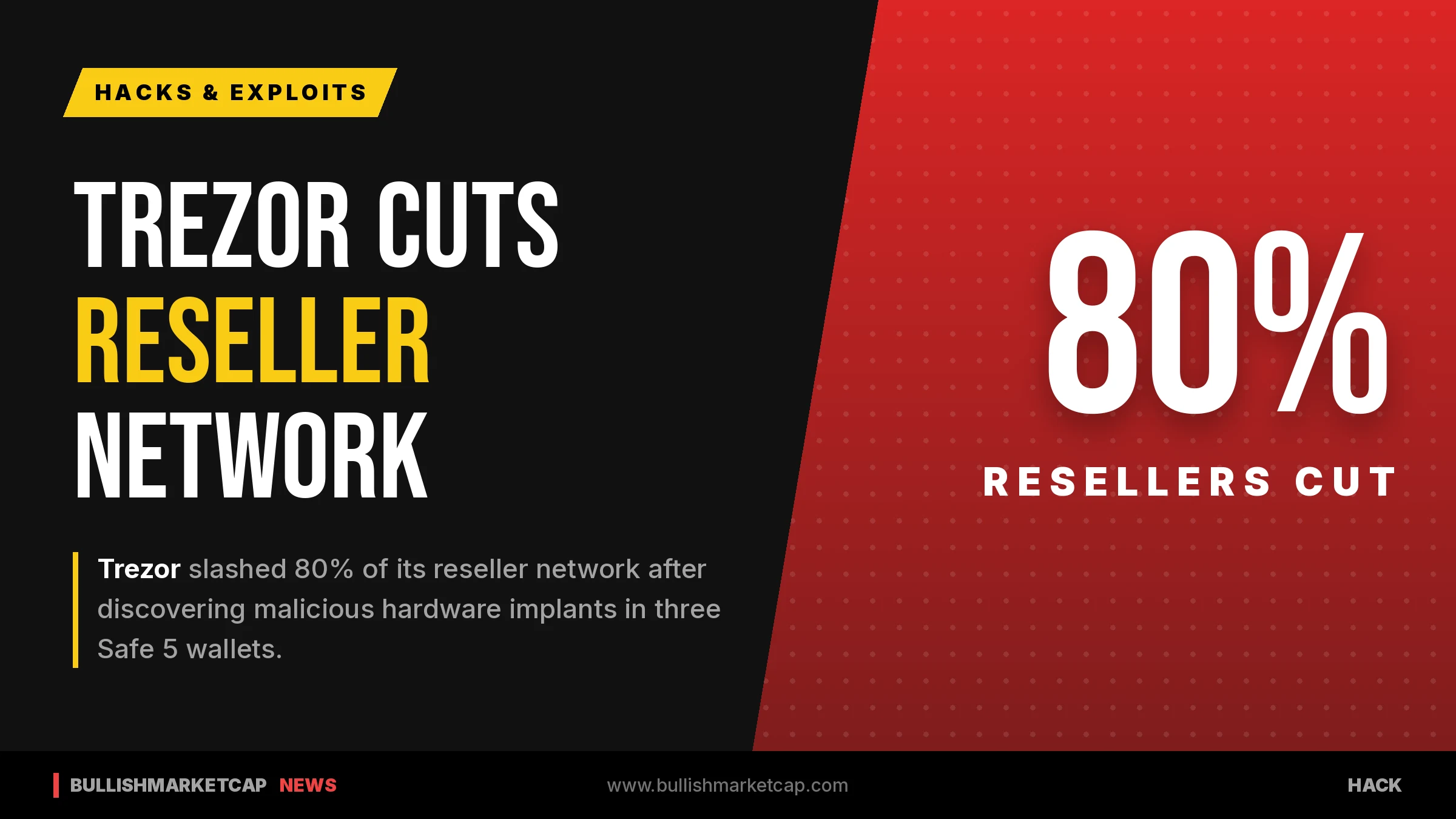
Hardware wallet manufacturer Trezor cut roughly 80% of its authorized reseller network after discovering physical circuit board implants in three Safe 5 devices distributed by former reseller CryptoBilis, according to CryptoNews. The added hardware intercepted recovery phrases directly from the device screen and attempted to transmit them over a mobile connection without altering the device's firmware or Secure Element.
Interception via Hardware Board
Instant Telegram notifications for large on-chain moves.
According to Trezor, the unauthorized modification consisted of an extra board installed between the Safe 5's main board and display. The interceptor logged display traffic, capturing recovery words and passphrases generated during wallet setup or restoration. Because the implant operated via an independent mobile connection, attackers did not need to compromise the owner's computer to exfiltrate private backup data.
Trezor received its first report on Oct. 28 from a customer in Indonesia who purchased a Safe 5 through CryptoBilis on Tokopedia. Trezor had already revoked CryptoBilis's reseller status on Oct. 9 after Ledger initiated an investigation into customer losses tied to the same vendor. While no fund losses have been reported, Trezor identified three compromised Safe 5 units purchased between Aug. 20 and Sept. 23.
Response and Firmware Mitigation
Trezor released firmware version 2.13.1 on Nov. 11 to prevent identified implants from extracting screen data. However, the manufacturer advised affected customers to transfer funds to entirely new wallets with fresh recovery backups, as previously exposed recovery phrases remain vulnerable.
The company extended replacement support to customers who bought any Trezor model from CryptoBilis from March 2026 onward, while tightening global stock control and sourcing requirements across its distribution channel.
Key facts
- Trezor confirmed hardware implants in three Safe 5 wallets sold by Southeast Asian reseller CryptoBilis.
- Attackers inserted a circuit board between the main board and screen to copy recovery words to a mobile network.
- Trezor revoked CryptoBilis's status on Oct. 9 and cut roughly 80% of its overall reseller network.
- Firmware 2.13.1 blocks implant data capture, but exposed users must migrate funds to new recovery phrases.
Source: crypto.news
This article is for information only and is not investment advice. BullishMarketCap news is produced with AI assistance from public sources and reviewed by our editors; see our editorial policy. Spotted an error? Tell us.