Super El Niño May Soften Winter Energy Squeeze
According to OilPrice, the current Super El Niño is the strongest observed since the 1950s, potentially moderating heating demand.
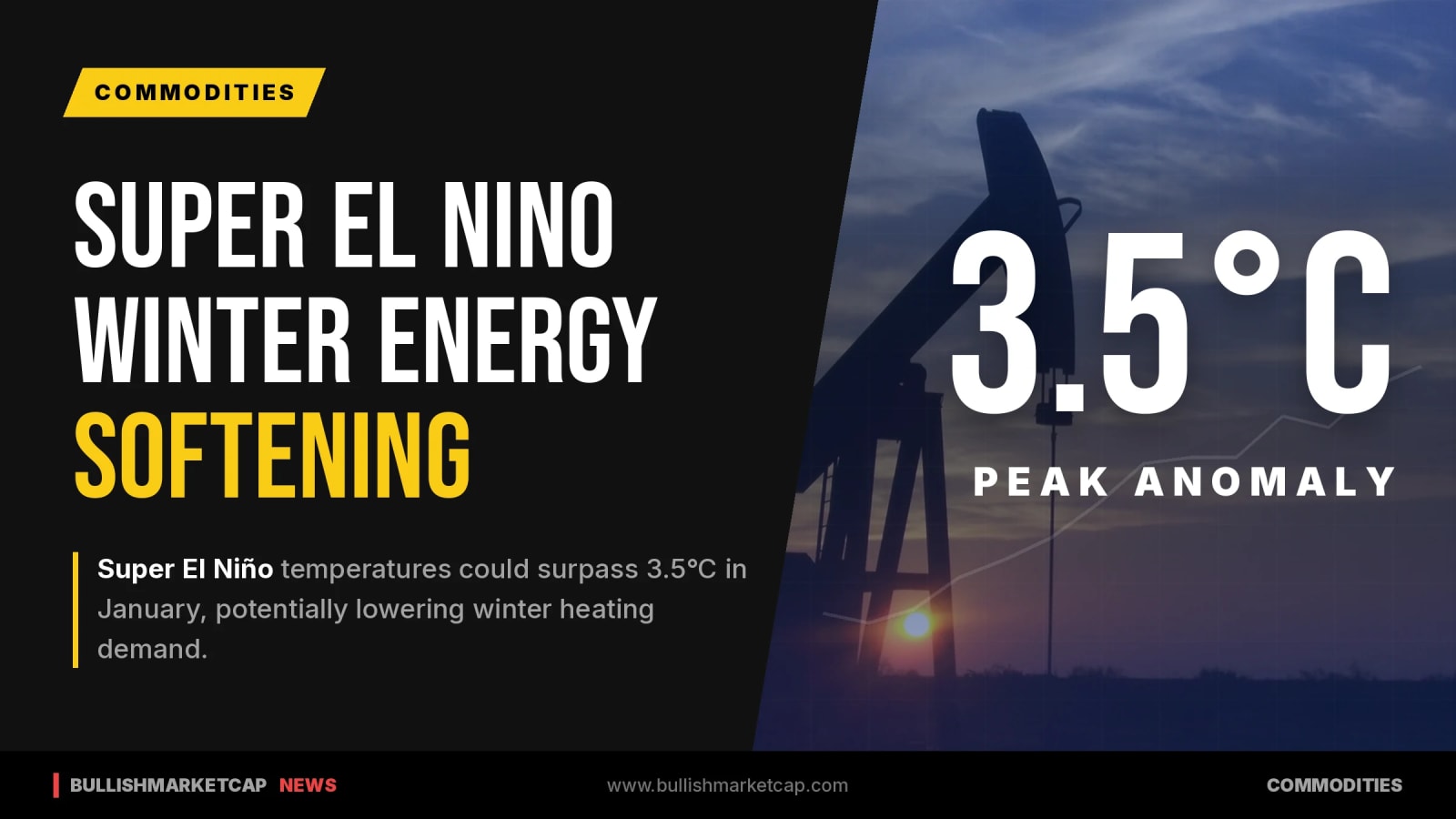
The current El Niño is the strongest observed since modern sea surface temperature monitoring began in the 1950s, with temperature anomalies that could surpass 3.5°C when it peaks in January. UBS's energy team hosted a call with meteorologist James Block to assess the weather impacts on energy markets amid a global refining crisis and continued disruptions to Strait of Hormuz energy flows.
Regional Temperature Impacts
Instant Telegram notifications for large on-chain moves.
According to OilPrice, warmer-than-normal weather is expected across several major energy-demand regions, including the northern United States, Europe, India, and Japan. This shift could trim heating demand while heating oil supplies remain tight. In the United States, temperatures across the Northern Plains, Northeast, and parts of Canada are expected to average 1.5°C to 3°C above normal. In Europe, temperatures across Southern and Central Europe are projected to average approximately 0.5°C to 1.5°C above normal.
Potential Cold Blasts
Despite the prevailing warmth, above-average temperatures will not entirely eliminate the risk of short-lived cold blasts. Block warned of potential black swan events, such as heavy snowstorms and ice storms, most likely occurring between late January and early February and lasting one to two weeks. In the Mid-Atlantic and Northeast, powerful nor'easters coinciding with Arctic cold outbreaks could still blanket major cities with heavy snow.
Key facts
- Current El Niño temperature anomalies could top 3.5°C at its January peak.
- Warmer conditions are forecast for the northern United States, Europe, India, and Japan.
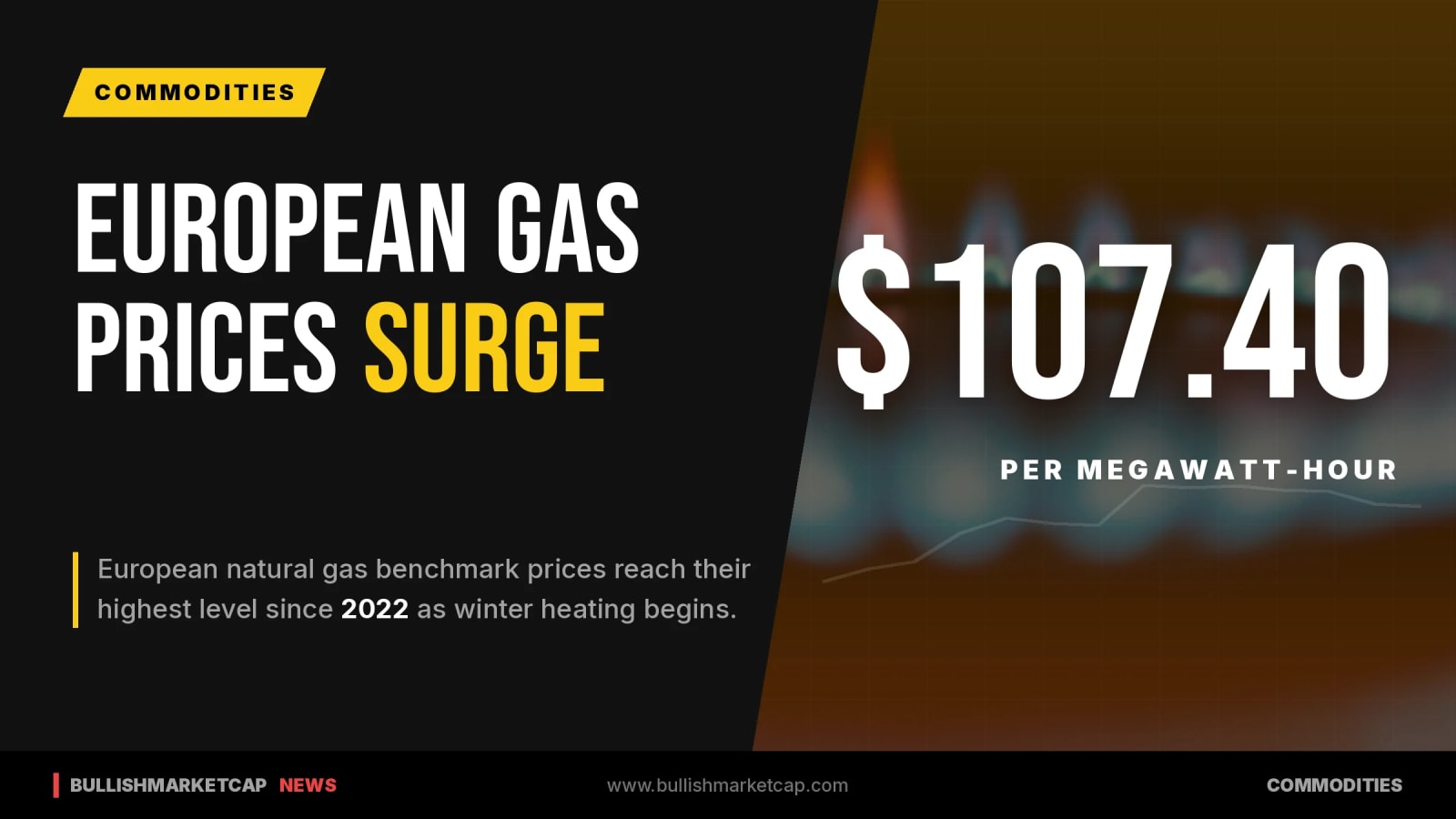
- European natural gas futures approached 90 euros per megawatt-hour.
- Potential black swan winter storms are flagged between late January and early February.
Source: oilprice.com
This article is for information only and is not investment advice. BullishMarketCap news is produced with AI assistance from public sources and reviewed by our editors; see our editorial policy. Spotted an error? Tell us.