Stablecoin Issuers Freeze $1.8B Following Binance Outflows
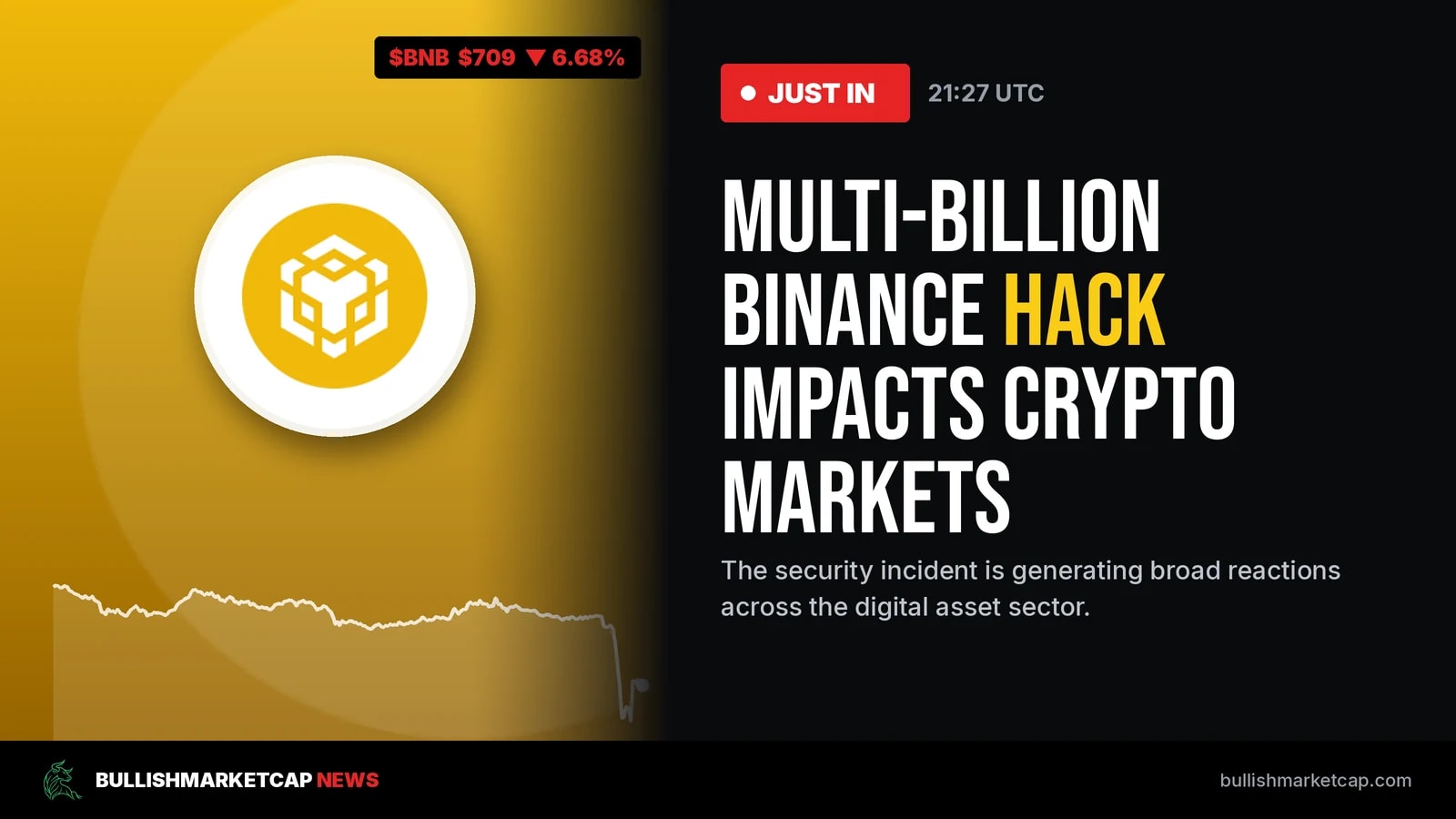
A multi-billion dollar exploit impacting Binance has sent shockwaves across cryptocurrency markets, according to CoinDesk.
Update (Oct 29, 22:12 UTC): Stablecoin issuers Tether and Circle froze a combined $1.8 billion in the main receiving wallet, with Tether freezing 975.1 million USDT and Circle freezing 823 million USDC.
Update (Oct 29, 22:12 UTC): Binance stated that user funds remain completely safe following the outflows, addressing approximately $3.5 billion drained from wallets labeled as Binance's on Ethereum.
Instant Telegram notifications for large on-chain moves.
Update (Oct 29, 21:57 UTC): Suspicious outflows from Binance have reached up to $5.8 billion, prompting Tether and Circle to freeze $1.79 billion in USDT and USDC.
Update (Oct 29, 21:42 UTC): Stablecoin issuers Tether and Circle reportedly froze nearly $1.8 billion in assets following suspicious wallet transfers involving a Binance-linked Ethereum wallet. Co-founder Changpeng Zhao reported that Tether and Circle froze approximately $971 million and $823 million, respectively.
A major security incident involving a multi-billion dollar exploit at Binance has begun impacting broader cryptocurrency markets, according to CoinDesk. The sudden security breach has triggered immediate reactions across the digital asset sector as market participants assess the fallout from the event.
Market Impact
The developments surrounding the exchange have introduced heightened volatility and selling pressure across major digital assets. Trading desks and market participants are closely monitoring liquidity conditions and platform operations as the situation unfolds.
Key facts
- A multi-billion dollar Binance hack is impacting crypto markets, according to CoinDesk.
- The security incident has triggered immediate reactions across the digital asset sector.
Source: news.google.com
This article is for information only and is not investment advice. BullishMarketCap news is produced with AI assistance from public sources and reviewed by our editors; see our editorial policy. Spotted an error? Tell us.