
Midnight Network Passes One Million Mainnet Transactions
Input Output Group announced the mainnet milestone after Midnight Explorer reported a cumulative total of 1,019,963 transactions.
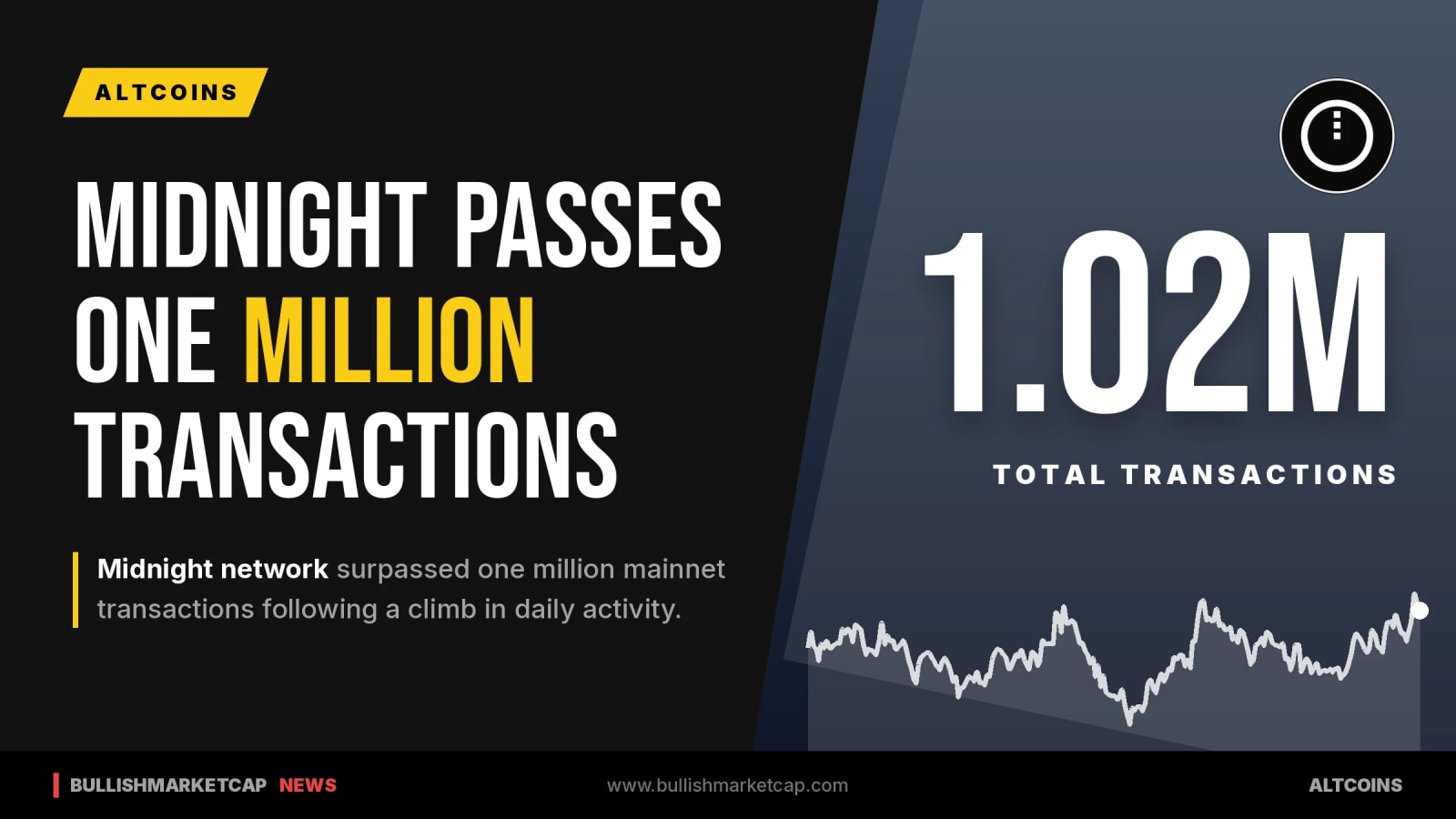
The Midnight network has passed one million mainnet transactions, with Input Output Group amplifying the milestone after Midnight Explorer reported a cumulative total of 1,019,963 transactions on Oct. 27, according to CryptoNews.
Daily network activity climbed significantly ahead of the milestone. Midnight recorded 47,714 daily transactions on Oct. 26, compared with 128 daily transactions on Sept. 27. The project launched permissionless smart contract deployment in September, enabling developers to deploy directly to the mainnet without a mandatory security review on the Preprod environment.
Instant Telegram notifications for large on-chain moves.
Token and Infrastructure Model
Midnight separates its native asset from the resource consumed when applications run. Its documentation identifies NIGHT as the public, unshielded native and governance token, while DUST functions as a shielded, nontransferable resource utilized for fees and smart contract execution. Holding registered NIGHT generates DUST, allowing transactions to consume the resource without spending the underlying NIGHT holdings.
Wallet integration has expanded alongside these developments. Gero Wallet version 2.7.1 introduced shielded mainnet balances and a connector capable of proving, funding, and submitting transactions for users, alongside support for sponsored DUST fees.
Key facts
- Midnight passed 1,019,963 cumulative mainnet transactions on Oct. 27, according to Input Output Group.
- Daily transactions reached 47,714 on Oct. 26, up from 128 recorded on Sept. 27.
- Permissionless smart contract deployment went live in September.
- The network utilizes NIGHT as its governance token and DUST as the resource consumed for transaction fees.
Source: crypto.news
This article is for information only and is not investment advice. BullishMarketCap news is produced with AI assistance from public sources and reviewed by our editors; see our editorial policy. Spotted an error? Tell us.