Kpler Suspects Gulf Producers Pay Iran for Safe Passage
Middle East crude exports have rebounded toward pre-war levels while Brent crude remains near $100 per barrel amid costly rerouting and transport constraints.
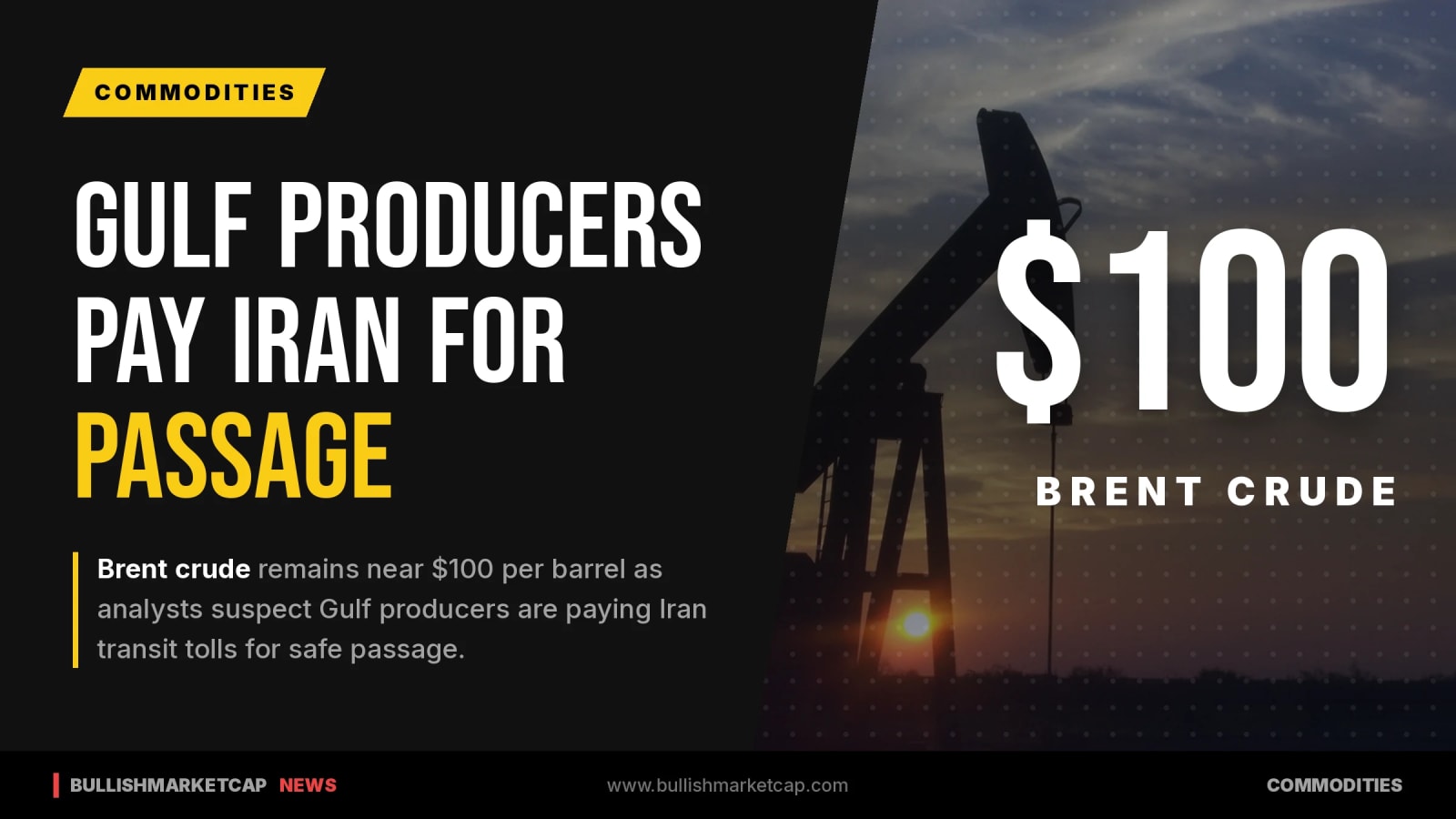
Middle East crude exports have rebounded toward pre-war levels, while Brent crude remains near $100 per barrel as costly rerouting, tanker shortages, ship-to-ship transfers, and military escorts keep delivered oil expensive. According to OilPrice, analysts suspect Iran may be quietly collecting tolls for safe passage through the Strait of Hormuz, potentially taking 10% to 20% of some cargoes, although claims remain unverified.
Export Volumes and Transport Bottlenecks
Instant Telegram notifications for large on-chain moves.
Kpler estimates that Middle East crude and condensate exports averaged roughly 16.5 million barrels per day in September, exceeding the pre-war average of 18 million bpd on several days during the final week of the month. Despite this recovery, oil prices have remained elevated. Producers are routing more crude through alternative pipelines and ports, while tankers moving through Hormuz increasingly rely on United States military escorts and vessel-intensive chains of ship-to-ship transfers.
Michelle Brohard, head of policy and geopolitical risk at Kpler, stated in an interview that certain Gulf nations could have struck deals with Iran to maintain oil flows over concerns regarding the long-term reliability of Washington's escorts. Brohard noted that shipments are facing a rush to move as much volume as possible before potential escalations.
Regulatory and Legal Challenges
Any potential Iranian transit fees face significant legal and geopolitical hurdles. Under the United Nations Convention on the Law of the Sea, ships possess a right of transit passage through international straits, and bordering states are generally prohibited from imposing simple passage charges. While Iran signed the convention in 1982, it never ratified it and relies on its own maritime laws.
Meanwhile, the U.S. Treasury Department's Office of Foreign Assets Control sanctioned Iranian cryptocurrency exchange BitBank last month, stating the Hormuz Safe Marine Services Authority used the exchange to transfer payments to the Iranian regime.
Key facts
- Middle East crude exports averaged 16.5 million barrels per day in September, according to Kpler estimates.
- Brent crude is trading around $100 per barrel, nearly $30 above its pre-war level.
- Analysts suspect Iran may be taking 10% to 20% of certain cargoes as transit tolls, though claims are unverified.
- The U.S. Treasury sanctioned Iranian cryptocurrency exchange BitBank last month over alleged links to Hormuz payment systems.
Source: oilprice.com
This article is for information only and is not investment advice. BullishMarketCap news is produced with AI assistance from public sources and reviewed by our editors; see our editorial policy. Spotted an error? Tell us.