
HKMA and Swift Explore Tokenized Cross-Border Payments
The Hong Kong Monetary Authority and Swift will examine connecting Project Ensemble with Swift's ledger for multi-currency tokenized deposits.
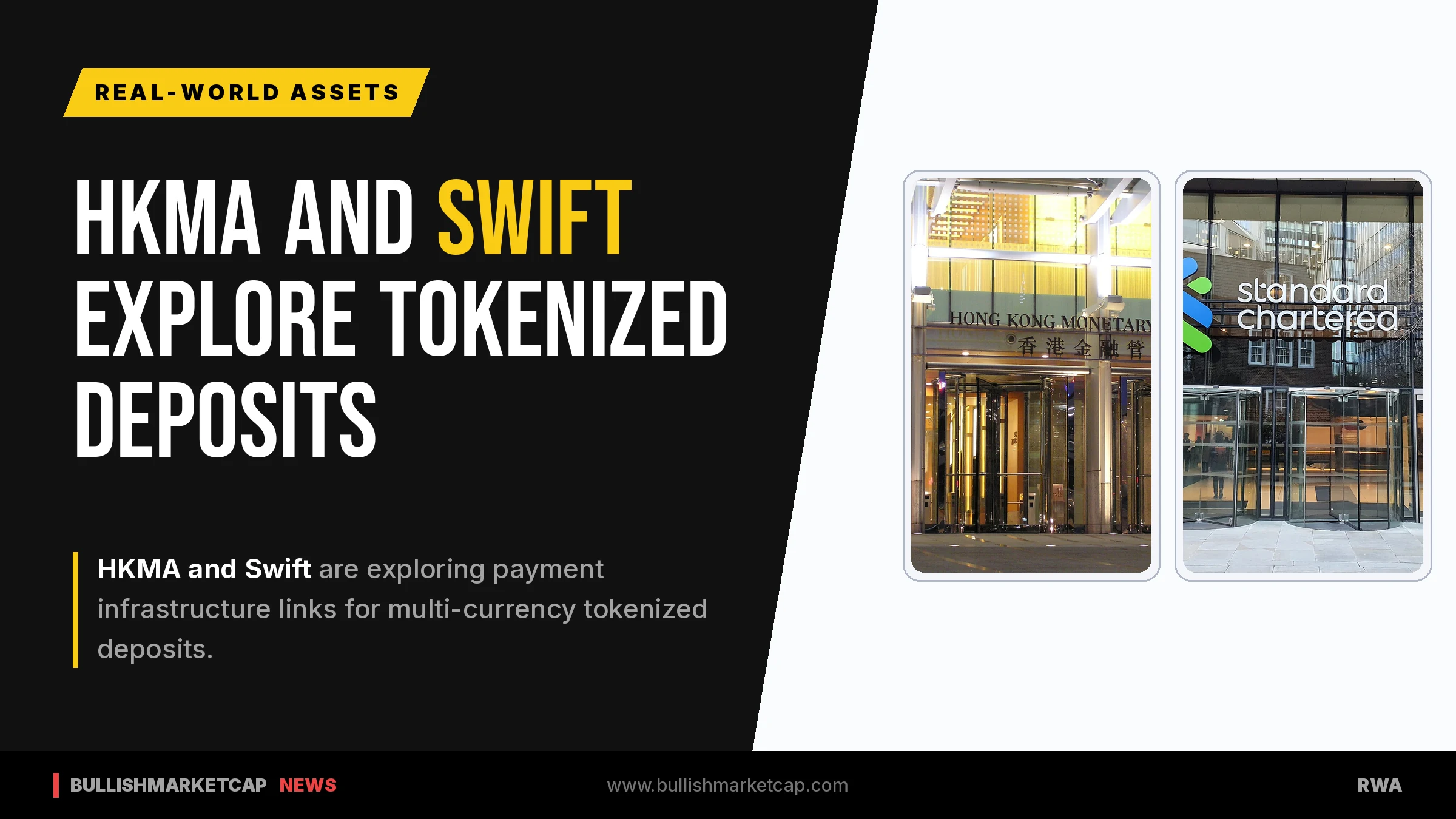
The Hong Kong Monetary Authority (HKMA) and Swift are exploring a connection between their payment infrastructures to support cross-border transfers using tokenized bank deposits, according to Cointelegraph. The initiative will examine links between Swift’s blockchain-based ledger and the settlement infrastructure of Project Ensemble.
Participating financial institutions include Bank of China (Hong Kong), Standard Chartered Bank (Hong Kong), and HSBC, the announcement stated. Tokenized deposits represent bank balances on a blockchain and remain claims on the issuing commercial bank, distinct from central bank digital currencies.
Instant Telegram notifications for large on-chain moves.
Project Integration and Pilots
The proposed Swift connection aims to evaluate how separate multi-currency payment systems can operate across borders. This follows a November 2 upgrade to EnsembleInfrastructure, the pilot phase of Project Ensemble launched in November 2025, which enables banks to settle tokenized deposit transactions around the clock using tokenized central bank money.
In July, Swift reported that its blockchain-based ledger was ready for initial use and prepared to pilot tokenized cross-border payments involving 17 major banks, including Citi, DBS, and HSBC.
Key facts
- The Hong Kong Monetary Authority and Swift are linking Project Ensemble with Swift's ledger.
- Participating banks include Bank of China (Hong Kong), Standard Chartered Bank (Hong Kong), and HSBC.
- Tokenized deposits function as bank balances represented on a blockchain as claims on commercial banks.
- The collaboration builds upon the November pilot phase upgrade of Project Ensemble for 24/7 settlements.
Source: cointelegraph.com
This article is for information only and is not investment advice. BullishMarketCap news is produced with AI assistance from public sources and reviewed by our editors; see our editorial policy. Spotted an error? Tell us.