Global Refineries Face Supply Squeeze Amid War Damage
War damage to Middle Eastern refineries and Ukrainian drone strikes on Russian facilities severely restrict global fuel supplies, keeping prices elevated.
The global refining crisis is deepening as military conflicts across key energy regions restrict fuel supplies and drive up costs, according to OilPrice. Ten years ago, European countries were closing refineries while Gulf oil states were building new ones, but many of those facilities have now been damaged in the war between the U.S. and Israel, and Iran.
Supply Disruptions in the Middle East and Russia
Instant Telegram notifications for large on-chain moves.
According to the report, the Yemeni Houthis claimed responsibility for an attack on the Ras Tanura refinery in Saudi Arabia, which has a capacity of 550,000 barrels daily. This follows damage to Gulf state refineries from Iranian retaliatory strikes. Meanwhile, the Ukrainian army has launched over 100 drone attacks on Russian refineries over the past few months, targeting about 30 refineries representing 80% of Russia's total refining capacity, which stood at 6.1 million barrels daily before the attacks.
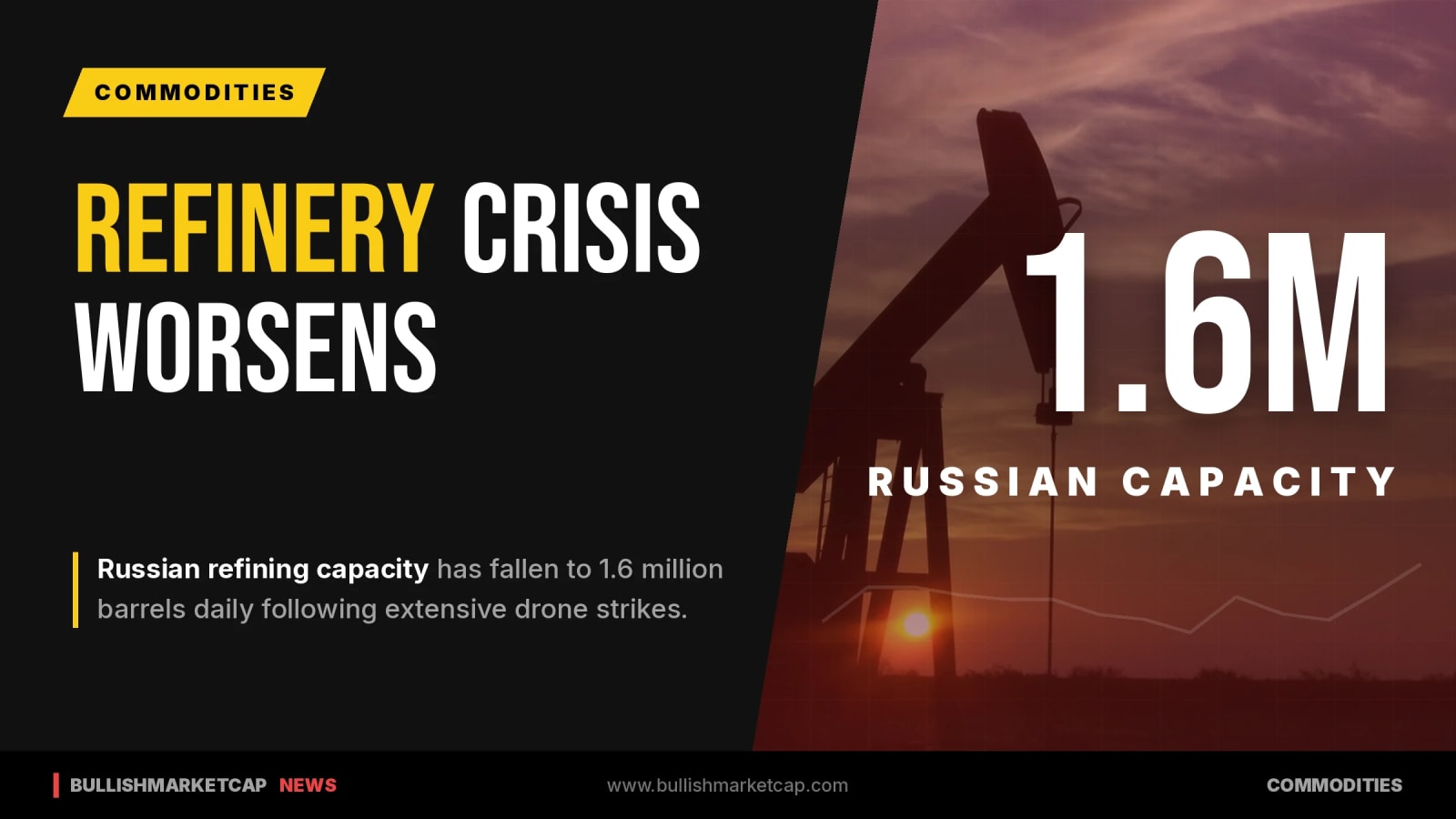
Market consultancy Industrial Info Resources estimated that the combined capacity of Russia's damaged refineries has fallen to 1.6 million barrels daily. In response to the supply squeeze, Russia previously banned diesel exports and curbed gasoline exports. While Russia has been repairing its facilities using locally manufactured equipment—with refining rates reportedly up by 25% between the start of October and the second half of the month to some 5 million barrels daily—full capacity remains restricted.
Price Outlook and Market Response
Earlier in the week, International Energy Agency Secretary-General Fatih Birol warned that crude oil and natural gas prices will remain elevated next year, noting that refined product prices are even higher. To ease tight markets, the U.S. struck a deal with Russia for the delivery of 300,000 tons of diesel fuel, equal to 75,000 barrels daily. However, analysts point out that this volume represents a small fraction of global fuel demand.
Key facts
- The Ras Tanura refinery in Saudi Arabia, with a 550,000 barrels daily capacity, was targeted by the Yemeni Houthis.
- Ukrainian forces targeted about 30 Russian refineries, representing 80% of the country's total refining capacity.
- Russian damaged refinery capacity fell to 1.6 million barrels daily, down from a pre-attack level of 6.1 million barrels daily.
- Russian refining rates rose by 25% between the start of October and the second half of the month to reach 5 million barrels daily.
- The U.S. arranged for the delivery of 300,000 tons of Russian diesel fuel, amounting to 75,000 barrels daily.
Source: oilprice.com
This article is for information only and is not investment advice. BullishMarketCap news is produced with AI assistance from public sources and reviewed by our editors; see our editorial policy. Spotted an error? Tell us.