Fed Rate Hike Odds Drop Dramatically for October Meeting
Expectations for a Federal Reserve interest rate hike in October have plunged sharply following weaker-than-expected employment and inflation data.
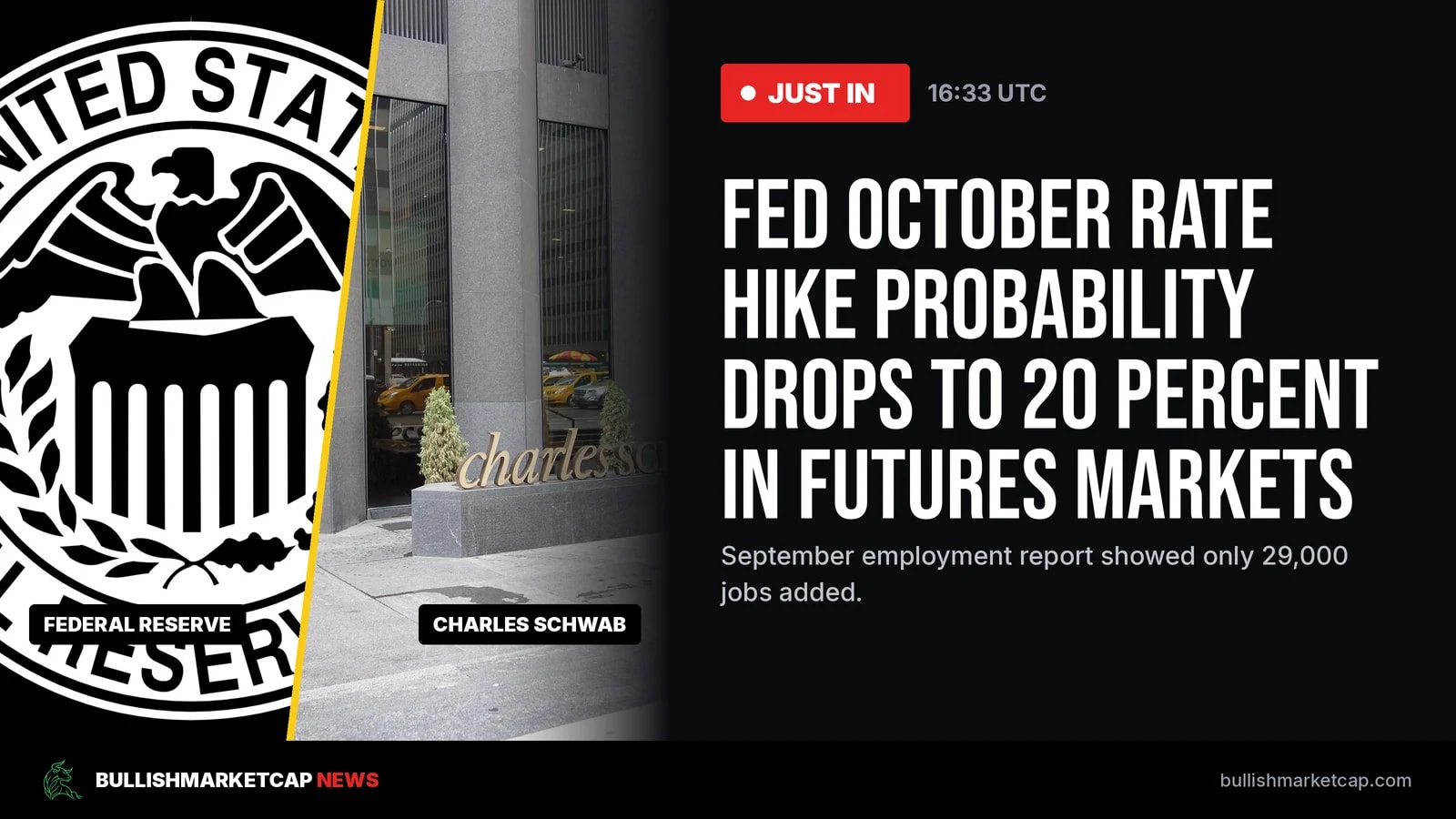
Expectations of a second interest rate hike by the Federal Reserve at its Oct. 27-28 meeting are plummeting, according to YahooStocks0. As recently as Sept. 28, the futures market put the probability of a rate hike this month at 71%. Currently, futures traders are pricing in just a 20% probability that the Fed will hike.
The shift comes after the September employment report, published on Oct. 2, showed the economy added just 29,000 jobs, compared to expectations of at least 84,000. Meanwhile, the unemployment rate ticked up from 4.1% to 4.2%, signaling a weakening labor market that could make the central bank more reluctant to tighten policy further.
Instant Telegram notifications for large on-chain moves.
Inflation and Wage Growth Trends
Signs of cooling inflation have also contributed to the shift in market expectations. The personal consumption expenditures price index rose 3% year-over-year when excluding food and energy, down from 3.3% the previous month. Additionally, annual wage growth slowed slightly, a metric monitored closely by the Federal Reserve.
Federal Reserve officials have adopted a more dovish tone. New York Federal Reserve President John Williams stated in a Sept. 29 speech that there is no need for urgency on the next rate hike, giving the central bank time to gather more economic data.
Key facts
- Futures market probability for an October Fed rate hike dropped from 71% on Sept. 28 to 20%.
- September employment report showed 29,000 jobs added, missing expectations of at least 84,000.
- U.S. unemployment rate ticked up from 4.1% to 4.2%.
- Personal consumption expenditures price index rose 3% year over year excluding food and energy, down from 3.3% the previous month.
Source: fool.com
This article is for information only and is not investment advice. BullishMarketCap news is produced with AI assistance from public sources and reviewed by our editors; see our editorial policy. Spotted an error? Tell us.