Autheo THEO Plunges 92% After Suspected Bridge Exploit
Autheo's THEO token dropped over 90% following a suspected cross-chain bridge exploit that enabled unauthorized token minting on Base.
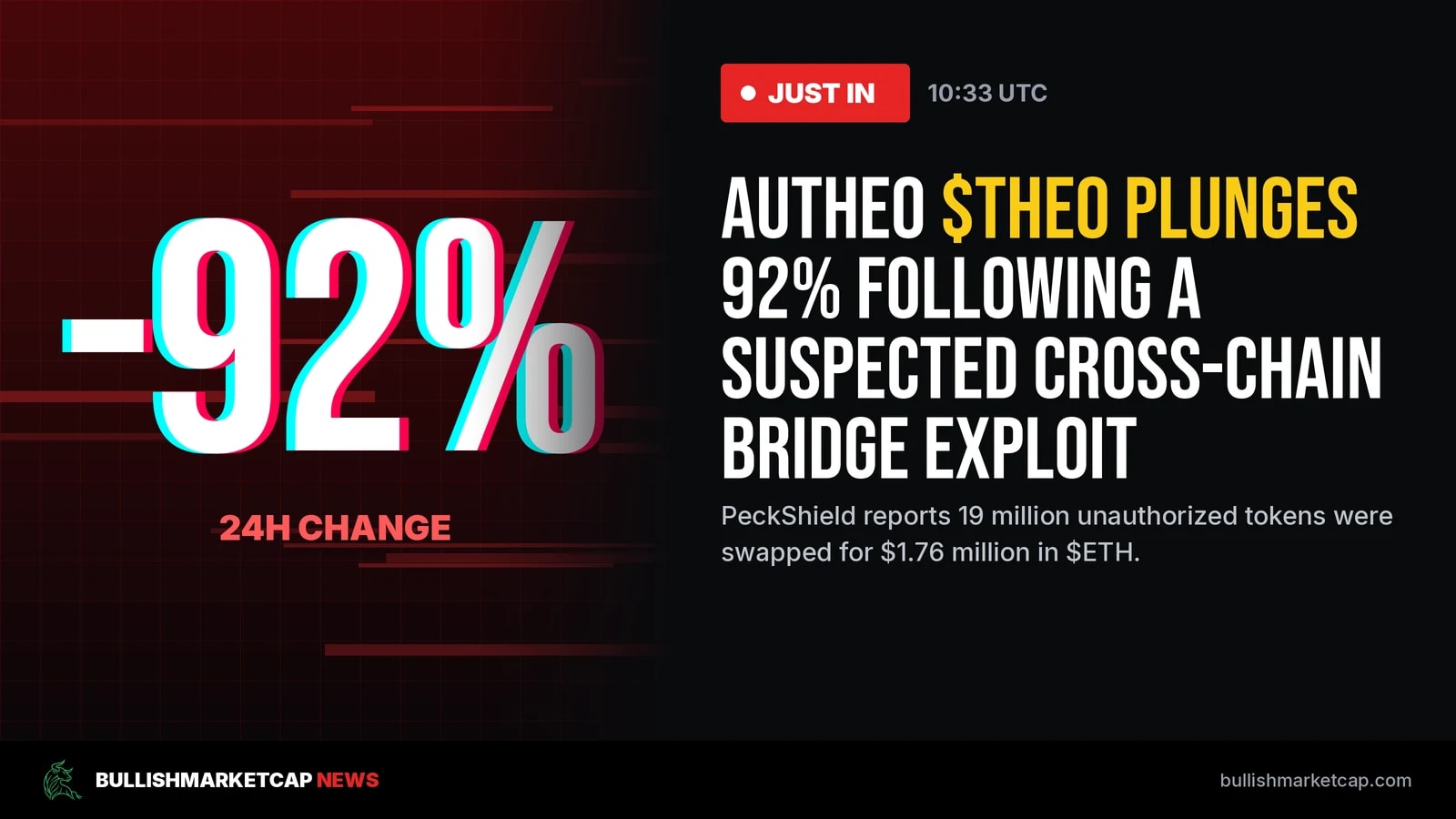
Autheo’s THEO token fell more than 90% over a 24-hour period following a suspected cross-chain bridge exploit that reportedly allowed an attacker to mint millions of unauthorized tokens on Base, according to CryptoNews.
Blockchain security firm PeckShield reported that an attacker minted 19 million THEO on Base and swapped the tokens for 700.8 ETH, valued at approximately $1.76 million, before bridging the proceeds to Ethereum. Separate researcher estimates pointed to a larger figure of approximately 119 million tokens created through a suspected Hyperlane bridge vulnerability, though Autheo has not confirmed the exact scale or the underlying vulnerability.
Instant Telegram notifications for large on-chain moves.
Autheo Advises Users to Halt Trading
Following the incident, Autheo issued a security notice advising token holders against buying, selling, or bridging THEO until its investigation is complete. The project cautioned users against interacting with suspicious contracts, sharing private keys, or engaging with recovery services claiming to offer compensation.
Amid the fallout, a verified X user operating under the name Zynex reported receiving 93.5 million THEO tokens from an address linked to the attacker and publicly offered to return the entire amount to the project.
Key facts
- Autheo’s THEO token plunged over 90% following a suspected exploit.
- PeckShield reported the minting of 19 million unauthorized tokens on Base, which were swapped for 700.8 ETH worth approximately $1.76 million.
- Researchers noted potential vulnerabilities involving the Hyperlane cross-chain bridge infrastructure.
- Autheo advised users to suspend all buying, selling, and bridging activity while investigations continue.
Source: crypto.news
This article is for information only and is not investment advice. BullishMarketCap news is produced with AI assistance from public sources and reviewed by our editors; see our editorial policy. Spotted an error? Tell us.